International Summer School on
Advanced Topics in AI
浙江师范大学数理医学院
浙江师范大学高端医学影像国际联合实验室
流体与传热技术浙江省国际科技合作基地
Registration
Register now to secure your spot – Places are limited
Register NowRegistration deadline: August 4
(Final participants will be confirmed on August 5, based on the capacity of the classroom)
On-site Speakers

Loris Bazzani
Biography
English: Loris Bazzani is an AI Research Leader with over 15 years of experience, spanning classical computer vision and machine learning to today's foundation and multimodal generative models. He is currently an adjunct professor and honorary research fellow at the University at Verona. In his previous role as Principal Scientist at Amazon (where he spent almost a decade), he led core research and product efforts across Prime Video, Alexa, and shopping, co-developing architectures for video understanding, vision-language representation, Large Multimodal Models, and diffusion models. His work powered features such as live sports highlights, virtual try-on, interactive product recommendations, and shopping assistants, reaching millions of users and delivering significant business impact. Loris obtained his Ph.D. in Computer Science from the University of Verona (Italy) in 2012, supervised by Prof. Vittorio Murino and Prof. Marco Cristani. He held postdoctoral positions at Dartmouth College with Prof. Lorenzo Torresani, and at the Italian Institute of Technology with Prof. Vittorio Murino. His research has been published in top-tier venues including CVPR, ICCV, ECCV, and ICML, with 50+ publications and patents.
中文: Loris Bazzani是人工智能研究负责人,拥有15年以上行业与学术研究经验,研究方向覆盖传统计算机视觉、机器学习,直至当下的基础大模型与多模态生成模型。现任维罗纳大学兼职教授、荣誉研究员。他曾在亚马逊任职近十年,任首席科学家,负责流媒体、Alexa语音助手及电商业务的核心算法研发。2012年于维罗纳大学取得计算机科学博士学位,先后在达特茅斯学院、意大利理工学院完成博士后研究。成果发表于CVPR、ICCV、ECCV、ICML等顶会,累计发表论文50余篇,拥有多项技术专利。

Ahmed Begga
Biography
English: Ahmed Begga is Assistant Professor at the University of Alicante, focusing on graph neural networks, heterophilic node classification, graph representation learning and spectral graph theory. He has 13 high-impact peer-reviewed papers and presented at international conferences, proposing multiple novel GNN architectures. He completed a 3-month research visit at Ca' Foscari University of Venice in 2024–2025 and currently joins Spain's national EXPLORA-TENN R&D project. He has won several academic and hackathon awards and contributed to the XPRIZE-winning VALENCIA4COVID project. He holds computer engineering and data science degrees from the University of Alicante, awarded the ValgrAI Excellence Scholarship.
中文: Ahmed Begga是西班牙阿利坎特大学计算机科学与人工智能系助理教授,主要研究图神经网络,研究方向包括异质图节点分类、图表示学习与谱图理论。他在高影响力期刊发表13篇同行评审论文,在国际权威会议展示研究成果,提出多款新型图神经网络模型与图深度位置编码方案。2024至2025年,他赴威尼斯大学跟随Marcello Pelillo教授开展为期三个月的访学研究,主攻图谱优化;目前参与西班牙国家级研发项目EXPLORA-TENN。他曾斩获多项学术与数据竞赛奖项,并参与获得XPRIZE疫情挑战赛奖项的VALENCIA4COVID项目。
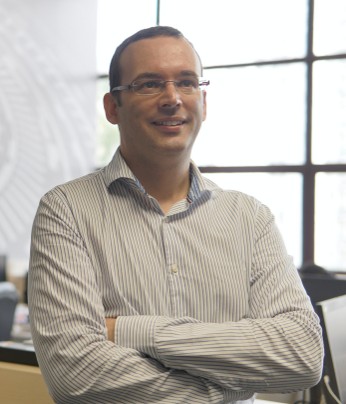
Giulio Chiribella
Biography
English: Giulio Chiribella is the director of QICI Quantum Information and Computation Initiative and the Associate Director for Research and Graduate Programs of the School of Computing and Data Science of The University of Hong Kong. He has done pioneering research on quantum causality, on the information-theoretic foundations of quantum theory, and on the ultimate precision limits of quantum measurements, for which he was awarded the Hermann Weyl Prize 2010. In 2020 and 2018 he received Senior Research Fellowships from the Hong Kong Research Grant Council (RGC) and from the Croucher Foundation, respectively. He currently serves as an elected member of the Hong Kong Young Academy of Sciences, a Young Member of the Hong Kong Academy of Engineering Sciences, a visiting professor at the University of Oxford, a visiting fellow of Perimeter Institute for Theoretical Physics, and as an Editorial Board Member of the journal Communications in Mathematical Physics. Before joining the University of Hong Kong, he held faculty positions at Oxford University and Tsinghua University, Beijing.
中文: Giulio Chiribella现任香港大学量子信息与计算研究中心(QICI)主任,同时担任计算与数据科学学院研究及研究生项目副院长。他在量子因果、量子理论信息论基础、量子测量极限精度三大方向做出开创性研究,凭相关成果斩获2010年度赫尔曼・外尔奖。2018年、2020年,他先后获香港裘槎基金会、香港研究资助局高级研究员基金资助。目前他身兼香港青年科学院当选院士、香港工程科学院青年院士、牛津大学访问教授、圆周理论物理研究所访问研究员,以及《数学物理通讯》编委会委员。加入香港大学前,他曾任职于牛津大学与北京清华大学。

Antonio Emanuele Cinà
Biography
English: Antonio Emanuele Cinà is a Tenure-track Assistant Professor of Computer Science at the University of Trieste, Italy. He was previously a Postdoctoral Researcher at the CISPA Helmholtz Center for Information Security in Saarbrücken, Germany, and an Assistant Professor at the University of Genova, Italy. His research lies at the intersection of machine learning and computer security, with a focus on the reliability of AI systems in adversarial and real-world settings. He investigates vulnerabilities and failure modes arising from spurious and adversarial correlations, namely non-causal patterns that can undermine the expected behavior of AI systems, from misclassifications in safety-sensitive applications to the generation of toxic and ethically inappropriate content. His work aims to evaluate and mitigate these threats through penetration testing methodologies and the design of defense techniques. Antonio is a member of the IEEE Computer Society and he serves as Associate Editor of the International Journal of Machine Learning and Cybernetics, Springer.
中文: Antonio Emanuele Cinà是意大利的里雅斯特大学计算机科学终身轨助理教授。他曾先后任职德国萨尔布吕肯 CISPA 亥姆霍兹信息安全中心博士后研究员、意大利热那亚大学助理教授。研究聚焦机器学习与计算机安全交叉领域,重点研究人工智能系统在对抗场景与真实环境下的可靠性。他主要探究由虚假关联、对抗关联引发的AI漏洞与失效问题。他的研究通过渗透测试方法评估上述风险,并设计对应的防御方案以降低威胁。他是IEEE计算机学会会员,同时担任施普林格出版社《国际机器学习与控制论期刊》副主编。

Francisco Escolano
Biography
English: Francisco Escolano is Full Professor at the University of Alicante, Spain. After his PhD in medical computer vision, he researched Bayesian inference and information theory at SKERI, and collaborated with global teams on spectral graph theory for pattern recognition. He founded the Robot Vision Group (2001–2011) for robotic visual perception, then launched the Mobile Vision Research Lab in 2012 to build assistive tech for the visually impaired, inventing the globally used NaviLens color QR code. His interdisciplinary team claimed the €250k XPRIZE Pandemic Response Challenge in 2020, with their model paper winning the IJCAI/ECAI 2022 Best Application Paper Award. His current work focuses on inductive spectral theory to enhance Graph Neural Networks, funded by the €2M EXPLORA consortium (2025–2028). He has an h-index of 26, over 2,800 citations, and consistent Q1/Q2 journal outputs across computer vision, robotics, graph theory and information theory.
中文: Francisco Escolano,西班牙阿利坎特大学计算机与人工智能正教授。博士深耕医学计算机视觉,曾在美国研究所研究贝叶斯推理与信息论,长期开展谱图理论、模式识别国际合作。2001–2011年组建机器人视觉团队;2012年创立移动视觉实验室,研发面向视障人群的 NaviLens 彩色二维码并全球推广。2020年其团队获25万欧元 XPRIZE 疫情挑战赛大奖,成果论文获 2022 IJCAI/ECAI最佳应用论文。现主攻优化图神经网络的归纳谱理论,研究获 2025–2028 年 200 万欧元项目资助。H指数26,论文引用超2800。
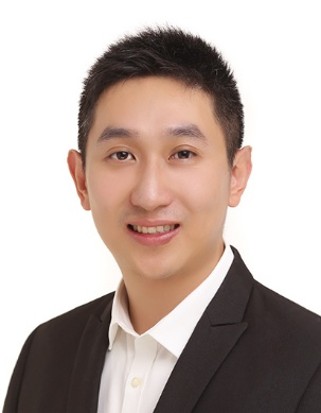
Xiaolin Huang (黄晓霖)
Biography
English: Xiaolin Huang, Professor in School of Electronics, Information and Electrical Engineering, Shanghai Jiao Tong University. He obtains his B.S. and Ph.D. from Xi'an Jiao Tong University and Tsinghua University, respectively. After that he worked as Postdoc in KU Leuven, Belgium, and then as an Alexander von Humboldt Fellow in University of Erlangen-Nuremberg, Germany. He joined Shanghai Jiao Tong University in 2016 and became a full professor in 2024. He has been awarded the 1000-talent (young program) in 2017. His research interests in generalization analysis towards deep learning, especially on indefinite learning and low dimensional structures in training dynamics. His contribution leads to about 20 papers in the top machine learning journals JMLR and IEEE TPAMI. He also has a review on piecewise linear neural networks on Nature Reviews. He is now serving as an Editor for Machine Learning, an Area Chair for ICLR, NeurIPS, ICML, CVPR, and ICCV. Besides theoretical research, he has been also working together with Huawei and Medtronic for industrial applications.
中文: 黄晓霖,上海交通大学电子信息与电气工程学院教授。2006年在西安交通大学获工学和理学学士学位,2012年在清华大学自动化系获工学博士学位。2012–2015年在比利时鲁汶大学任博士后。2015年作为洪堡学者在德国埃尔兰根-纽伦堡大学任研究组组长。2016年加入上海交通大学。主要研究方向为机器学习、优化算法及其在医学图像中的应用;已在JMLR, TPAMI等期刊发表论文四十余篇。研究成果获得德国医学图象处理年会最佳科学贡献一等奖(2017),2019 International Conference on Industrial Artificial Intelligence 最佳论文奖。
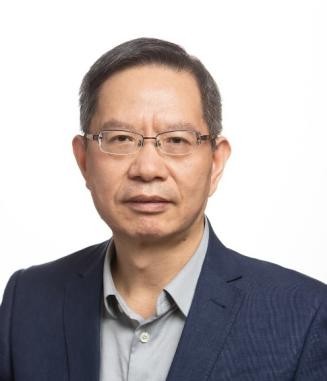
Cheng-Lin Liu (刘成林)
Biography
English: Cheng-Lin Liu is a Professor at the State Key Laboratory of Multimodal Artificial Intelligence Systems, Institute of Automation of Chinese Academy of Sciences. He is a vice president of the Institute of Automation, a vice dean of the School of Artificial Intelligence, University of Chinese Academy of Sciences. He received the PhD degree in pattern recognition and intelligent control from the Chinese Academy of Sciences, Beijing, China, in 1995. He was a postdoctoral fellow in Korea and Japan from March 1996 to March 1999. From 1999 to 2004, he was a researcher at the Central Research Laboratory, Hitachi, Ltd., Tokyo, Japan. His research interests include pattern recognition, machine learning and document image analysis. He has published over 400 technical papers in journals and conferences. He is an Associate Editor-in-Chief of Pattern Recognition Journal and Acta Automatica Sinica, an Associate Editor of International Journal on Document Analysis and Recognition, Cognitive Computation, IEEE/CAA Journal of Automatica Sinica, Machine Intelligence Research, CAAI Trans. Intelligence Technology, CAAI Artificial Intelligence Research and Chinese Journal of Image and Graphics. He is a Fellow of the CAA, CAAI, IAPR, IEEE and AAIS.
中文: 刘成林,中国科学院自动化研究所多模态人工智能系统国家重点实验室研究员。现任自动化研究所副所长、中国科学院大学人工智能学院副院长。1995年于中国科学院获模式识别与智能控制专业博士学位。1996–1999年在韩国、日本从事博士后研究;1999–2004年任职于日本东京日立集团中央研究所。研究方向为模式识别、机器学习与文档图像分析,发表学术论文400余篇。兼任Pattern Recognition、自动化学报副主编,以及多个国际期刊副编委。是中国自动化学会、中国人工智能学会、国际模式识别协会、IEEE、亚洲人工智能学会会士。

Vittorio Murino
Biography
English: Vittorio Murino is Full Professor of Computer Vision and Machine Learning at the University of Verona, and PI of the AIGO research group at the Italian Institute of Technology. He once chaired the Department of Computer Science at the University of Verona, led the PAVIS lab at IIT, and served as Senior Video Intelligence Expert at Huawei Ireland Research Centre. His research focuses on deep learning domain adaptation, multimodal learning, video surveillance and biomedical imaging. He has published over 400 peer-reviewed papers, served as conference committee member for top AI & vision conferences, and is an IEEE, IAPR and ELLIS Fellow.
中文: Vittorio Murino意大利维罗纳大学计算机视觉与机器学习正教授,同时担任意大利理工学院 AIGO 向善人工智能课题组首席研究员。他曾任维罗纳大学计算机系系主任、意大利理工学院 PAVIS 模式分析与计算机视觉实验室负责人,并在华为爱尔兰研究院担任高级视频智能专家。研究方向为深度学习域自适应、多模态学习,以及视频监控、生物医学影像等落地应用。累计发表400余篇同行评审论文,长期担任CVPR、ICML、NeurIPS等顶会程序委员会委员,同时是IEEE、IAPR、ELLIS会士。

Sebastiano Vascon
Biography
English: Sebastiano Vascon is an Associate Professor of Computer Science at Ca' Foscari University of Venice. He has 10+ years of experience in the field of Artificial Intelligence, Machine Learning, and Computer Vision. He specializes in graph-based and game-theoretic models for learning in scenarios where the context and the relationships play a central role. He authored 70+ scientific contributions in both methodological and applicative areas of artificial intelligence. He also enjoys interdisciplinary research, applying AI in different domains like robotics, cultural heritage, neuroscience, climate science, polar science, and environmental modeling. He regularly publishes in leading venues and top-tier journals and serves regularly as an area chair for major international conferences in his research fields.
中文: Sebastiano Vascon是意大利威尼斯大学计算机科学系副教授。他于2016年在意大利理工学院获得纳米科学博士学位,并于2020年在卡福斯卡里大学获得计算机科学博士学位。研究活动主要集中在人工智能、深度学习、机器学习和计算机视觉领域,并采用图论方法和博弈论模型。他也热衷于跨学科研究,将人工智能与文化遗产、神经科学、环境科学、极地科学和气候变化等领域相结合。他曾在高影响力会议和期刊上发表论文,并定期担任其研究领域中最负盛名会议的区域主席和项目委员会成员。
Guisong Xia (夏桂松)
Biography
English: Prof. Guisong Xia is a Full Professor and Hongyi Distinguished Professor at Wuhan University, holds NSFC Young Scientist Fund Type A & B. He is Executive Dean of the School of AI and Deputy Director of the National Multimedia Software Engineering Research Center. He leads over 20 national vertical research projects on computer vision, machine learning and remote sensing intelligence, with 150+ top publications and 37,000+ Google Scholar citations, whose technologies have been deployed in national key engineering systems. His awards include Hubei Natural Science First Prize, three China Surveying & Mapping Progress First Prizes, IEEE GRSS Most Influential Paper Award and CSIG Excellent Dissertation Supervisor Award. He serves as journal editorial board member, vice chair and standing committee member of two national academic societies.
中文: 夏桂松,武汉大学二级教授、弘毅特聘教授,国家自科基金青年A类/B类项目获得者,现任武汉大学人工智能学院执行院长、国家多媒体软件工程技术研究中心副主任。长期从事计算机视觉、机器学习、智能无人系统、遥感智能信息处理等研究,主持国家自然科学基金等纵向研究项目20余项,发表业内Top期刊/会议论文150余篇,谷歌学术引用3.7万余次。获得湖北省自然科学一等奖1项、中国测绘科技进步一等奖3项、IEEE GRSS最有影响力论文奖等荣誉。
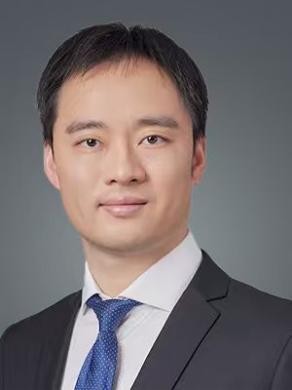
Junchi Yan (严骏驰)
Biography
English: Junchi Yan is a Professor with School of Artificial Intelligence, Shanghai Jiao Tong University, Shanghai, China. Before that, he was a full-time Senior Research Staff Member with IBM Research and later an affiliated consultant Researcher with AWS AI Lab. His research interests include machine learning and AI4Science and was once featured on IEEE Explorer. He serves the Associate Editor for IEEE TPAMI/TNNLS/TEVC/CIM, JMLR, TMLR, Pattern Recognition, and (Senior) Area Chair for CVPR, ECCV, ICML, NeurIPS, ICLR, AAAI etc. He is a Fellow of IAPR and IET. He received the IEEE CS AI'10 to Watch 2024, IEEE CIS Early Career Award 2026, and CVPR 2024 and IROS 2025 Best Paper Candidate, ACL 2025 Outstanding paper. He serves on the Board of ICML, and as the program co-chair for ACM Multimedia 2026.
中文: 严骏驰,上海交通大学人工智能学院教授、助理院长、IAPR/IET Fellow。科技创新2030"新一代人工智能"青年项目负责人、国家自然科学基金委优青、教育部资源建设深度学习首席专家。曾任IBM研究院研究员(任职7年)。研究方向为机器学习及交叉应用,获陕西省自然科学一等奖。发表CCF-A类第一/通讯作者论文过200篇(CVPR24最佳论文候选、AAAI21最具影响力论文),引用超2万次。任ICML、NeurIPS、ICLR等顶级会议(高级)领域主席、IEEE T-PAMI、Pattern Recognition等期刊高级编委。
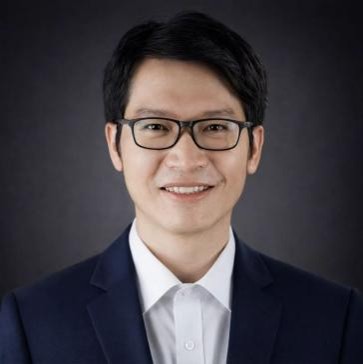
Tianyi Zhou (周天异)
Biography
English: Dr. Tianyi Zhou serves as Head of the AI Agents Division and Platform Director of the National Centre of Excellence for Applied AI at A*STAR (Agency for Science, Technology and Research), Singapore. He earned his doctoral degree from Nanyang Technological University, Singapore. Dr. Zhou leads multiple national and international key R&D projects. He has authored over 200 papers published in top CCF-A conferences and Q1 journals under the Chinese Academy of Sciences classification, covering machine learning, artificial intelligence and information security. He is a permanent editorial board member of prestigious SCI journals including IJCV, AIJ and IEEE Transactions series. He has also held chair and vice-chair positions at numerous top-tier international conferences such as IJCAI 2025 and IJCNN 2027. His research work has won Best Paper Awards at flagship conferences including IJCAI, ECCV and ACML.
中文: 周天异,新加坡国家科研院AI智能体部部长,国家应用AI卓越中心平台主任。毕业于新加坡南洋理工大学。主持多项国家级和国际间重点研发项目,已在机器学习、人工智能、信息安全等领域核心期刊(中科院一区)和国际会议(CCF A类)上发表论文200余篇。担任CCF A类期刊IJCV、AIJ、IEEE Transactions等国际重要SCI期刊常任编委,担任IJCNN 2027、IJCAI 2025等国际顶级会议主席和副主席。获得IJCAI、ECCV、ACML等多个国际顶级学术会议最佳论文奖。
Online Speakers

Ismail Ben Ayed
Biography
English: Prof. Ismail Ben Ayed is a Canada Research Chair in Medical Imaging and Artificial Intelligence at École de Technologie Supérieure (ETS), Université du Québec, and a member of the CRCHUM Research Centre affiliated with the Université de Montréal. He is a distinguished young researcher with outstanding academic achievements. His research centers on applying advanced optimization algorithms to medical image analysis, computer vision and machine learning, yielding numerous influential outcomes. He serves as a reviewer for NSERC (Natural Sciences and Engineering Research Council of Canada) and a program committee member of top international conferences including CVPR, ICCV, ECCV, NeurIPS, AAAI and ICLR. He has been invited by multiple Canadian mainstream media to share cutting-edge AI technologies. He leads international advances in algorithm innovation for few-shot learning, weakly supervised learning and adversarial learning. He has published around 150 papers and book chapters in top venues such as TPAMI and IJCV, and holds nearly ten international patents.
中文: Ismail Ben Ayed教授是加拿大魁北克大学高等工程学院(ETS)医学图像与人工智能的首席教授,蒙特利尔大学医学研究中心(CRCHUM)成员。主要研究工作集中在将现代优化计算方法成功应用于医学图像分析、计算视觉及机器学习等多个研究领域。担任加拿大科学工程基金NSERC评审人,以及CVPR、ICCV、ECCV、NeurIPS、AAAI、ICLR等国际顶级会议程序委员会成员。在小样本学习、弱监督学习以及对抗学习等研究领域处于国际领先地位,共发表各类国际专业顶级期刊与会议论文约150篇,拥有近十项国际专利。
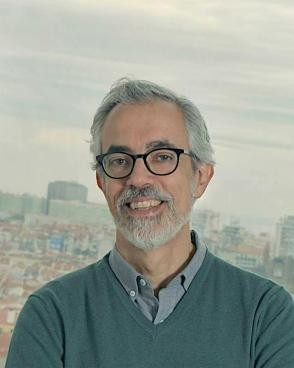
Mário Figueiredo
Biography
English: Mário Figueiredo is an IST Distinguished Professor and holder of the Feedzai Chair on Machine Learning at Instituto Superior Técnico (IST), University of Lisbon. He also serves as a group leader at Instituto de Telecomunicações and is the Director of the ELLIS Unit Lisbon. His research career spans a broad range of topics, including statistical machine learning, image processing, optimization, inverse problems, and increasingly, causal inference and discovery. He is a Fellow of the IEEE, IAPR, EURASIP, and ELLIS. His contributions have been recognized with the EURASIP Individual Technical Achievement Award, the IEEE W. R. G. Baker Award, and the IAPR Pierre Devijver Award. He is a member of the Lisbon Academy of Sciences and the Portuguese Academy of Engineering.
中文: Mário Figueiredo是里斯本大学高等理工学院杰出教授,同时担任该校Feedzai机器学习讲席教授。他兼任葡萄牙电信研究所课题组负责人、欧洲学习与智能系统协会里斯本分部主任。研究方向覆盖统计机器学习、图像处理、优化理论、逆问题,近年重点拓展因果推断与因果发现领域。他是IEEE、国际模式识别协会(IAPR)、欧洲信号处理协会(EURASIP)及欧洲学习与智能系统协会(ELLIS)会士。曾获欧洲信号处理协会个人技术成就奖、IEEE W.R.G.贝克奖、国际模式识别协会皮埃尔・德维杰弗奖,是里斯本科学院、葡萄牙工程科学院院士。

Panos Pardalos
Biography
English: Panos Pardalos is a Distinguished Emeritus Professor at the University of Florida, with affiliations in biomedical engineering and computer science. He has served as an academic advisor at HSE LATNA since 2011. A world-leading expert in global optimization, mathematical modeling, energy systems and data science, he is a Fellow of AAAS, AIMBE, EUROPT and INFORMS. His prestigious honors include the Constantin Caratheodory Prize, EURO Gold Medal, and Humboldt Research Award. He is the founding/co-founding editor of multiple top academic journals. He has authored over 900 papers and 300 books, and has supervised 71 PhD students.
中文: Panos Pardalos是佛罗里达大学杰出荣休教授,兼任生物医学工程与计算机科学学科研究员,2011年起任俄罗斯高等经济学院LATNA实验室学术顾问。他是全局优化、数学建模、能源系统、数据科学领域的国际权威学者,拥有AAAS、INFORMS等多个国际顶尖学会会士头衔,斩获卡拉西奥多里奖、欧洲运筹学金奖、洪堡研究奖等重磅学术荣誉。他创办、联合创办多本顶级学术期刊,累计发表论文900余篇、专著300余部,已指导71名博士研究生毕业。
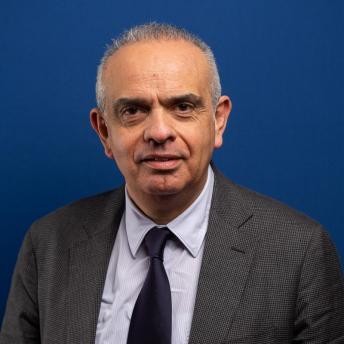
Fabio Roli
Biography
English: Prof. Fabio Roli holds professorships at the University of Genoa and the University of Cagliari in Italy, and is a Distinguished Professor at Zhejiang Normal University. He is an IEEE Fellow and IAPR Fellow, as well as the founder and director of the Pattern Recognition and Applications Lab at the University of Cagliari. His long-term research focuses on the design theory and practical applications of pattern recognition systems. He has played a leading role in establishing and advancing research fields including multiple classifier design, adversarial pattern recognition, and machine learning for computer security. For his contributions, he received the Pierre Devijver Award from the International Association for Pattern Recognition and the Pattern Recognition Medal from the journal Pattern Recognition. He has authored over 300 academic papers, most of which appear in top journals such as IEEE TPAMI, IEEE Transactions on Cybernetics, IEEE Signal Processing Magazine, IEEE TCSVT, IEEE TGRS and Pattern Recognition, as well as flagship conferences including CVPR, ICME and ICPR.
中文: Fabio Roli教授是意大利热那亚大学与卡利亚里大学教授,浙江师范大学杰出教授,IEEE Fellow,IAPR Fellow,卡利亚里大学模式识别与应用实验室创始人、实验室主任。长期从事模式识别系统设计理论及其应用研究,对多分类器设计、对抗模式识别和机器学习在计算机安全中的应用等研究领域的创建和发展起到了主导作用,获得国际模式识别协会的"Pierre Devijver奖"以及Pattern Recognition期刊的"Pattern Recognition Medal"。已发表学术论文300多篇,多数发表在领域顶级期刊和顶级会议。
Program
| Date | Time | Title / Activity | Speaker |
|---|---|---|---|
24Aug | 09:00-11:00 | Registration - Opening Ceremony (注册 开幕式) | — |
| 11:00-12:00 | Prof. Ismail Ben‑Ayed | ||
Abstract Large-scale foundational Vision-language models (VLMs) are currently transforming computer vision, emerging as a promising path toward robust generalization. This has sparked substantial interest in adapting such foundation models to downstream tasks under realistic constraints: limited labeled data (few-shot adaptation), unlabeled target-domain samples (test-time adaptation), and restricted computational or memory resources (parameter-efficient fine-tuning). In this presentation, I will review recent trends in fine-tuning large VLMs under such practical constraints. I will survey state-of-the-art adaptation strategies and highlight very recent findings that expose important limitations in current evaluation protocols. These results call into question the actual progress suggested by much of the recent literature, particularly approaches relying on convoluted prompt-learning mechanisms. I will emphasize insights grounded in mathematical optimization that, somewhat surprisingly, enable competitive few-shot adaptation, while significantly reducing hyperparameter search and achieving speedups of several orders of magnitude compared to leading methods. I will also present a test-time adaptation approach tailored specifically to VLMs. The talk will be illustrated with several application examples, including use cases in medical imaging. | |||
| 14:00-17:00 | Prof. Sebastiano Vascon | ||
Abstract
This lecture presents the theoretical foundations of Graph Neural Networks (GNNs), starting with core models such as Graph Convolutional Networks (GCN) and Graph Attention Networks (GAT) and the principles of message passing and neighborhood aggregation. The lecture covers the common tasks performed on graph-structured data, including node classification, link prediction, and graph classification, along with an analysis of model expressiveness and its limitations. Graph Transformers are also briefly mentioned as an alternative approach that leverages global attention to address some limitations of message-passing architectures. | |||
25Aug | 09:00-12:00 | Prof. Francisco Escolano | |
Abstract This session addresses the theoretical foundations of Neural Spectral Theory (NST) which is a “neuralization” of Spectral Graph Theory (SGT). SGT is a foundational element of Graph Neural Networks (GNNs) and Geometric Deep Learning. Why? (1) Graphs are permutation-invariant objects as well as graph spectra. Knowing whether two graphs are iso-spectral is a proxy of graph classification. (2) Graph properties such as how many communities/clusters it contains, how far are two nodes if we launch random walks to link them, and how hard is to diffuse information through the edges are linked to the values of certain spectral quantities. Mastering SGT thus provides a grounded approach to assess the expresiveness of Geometric Deep Learning. Therefore, we will structure this talk as follows:
Overall, this session delivers the fundamentals of SGT and its application to GNNs and Deep Geometric Learning. It also provides the first steps to the “neuralization” of SGT, i.e. towards the open question of bounding the predictive power of the learnt eigenfunctions and the evaluation of the spectral elements derived from them. | |||
| 14:00-17:00 | Dr. Ahmed Begga | ||
Abstract This hands-on session complements the theoretical foundations of Neural Spectral Theory by demonstrating its practical implementation across diverse graph learning tasks. We present a unified framework where learnable eigenfunctions—trained through the interplay of spectral and task-specific losses—consistently achieve state-of-the-art performance in challenging scenarios. We begin with node classification in heterophilic networks, where traditional GNNs fail due to neighboring nodes having different labels. Our Diffusion-Jump GNN architecture learns structural filters derived from diffusion distances, enabling "jumps" through the network to connect distant homologs. This approach introduces a novel measure of structural heterophily and achieves competitive results across both homophilic and heterophilic benchmarks, including large-scale graphs. Next, we address link prediction through learnable diffusion distances. By learning approximate eigenvectors of the graph Laplacian, our DiffusionGNN provides a metric that is simultaneously local enough for intracommunity edges and global enough for distant node connections. This bypasses the computational bottleneck of subgraph extraction methods while achieving superior performance on standard benchmarks. For graph classification, we introduce Deep Positional Encoders (DPE), which overcome the "anchoring effect" of pre-computed spectral embeddings. By making eigenvectors fully reactive to classification losses, DPE provides unique positional encodings that significantly improve discriminative power in both GNNs and Graph Transformers. Finally, we present Inductive Spectral Theory (IST) for graph rewiring, which learns consensus eigenfunctions across graph populations. IST strategically adds edges both locally (encouraging community structure) and globally (facilitating long-range connections), addressing over-squashing while serving as principled data augmentation. | |||
26Aug | 09:00-12:00 | Dr. Ahmed Begga | |
Abstract This hands-on session provides a practical introduction to Graph Neural Networks (GNNs) and their applications across diverse graph learning tasks. We present a unified framework where message-passing architectures—trained through task-specific objectives—consistently achieve competitive performance on challenging benchmarks. | |||
| 14:00-15:00 | Prof. Fabio Roli | ||
Abstract Modern machine-learning systems are periodically retrained, updated, and replaced to incorporate new data, adapt to distributional shifts, improve accuracy, exploit better architectures. Model updating is a standard practice in deployed AI systems. However, updating a model is not only a matter of improving its average performance. A new model can be globally better than the previous one and still behave worse on specific inputs or with respect to specific trustworthiness properties. This phenomenon is usually perceived by users as a performance regression of the system. In classical software engineering, regression testing is a standard practice to ensure that a system still works as expected after a code change. In machine learning, however, the notion of performance regression is more subtle and is not yet well understood. In this talk, I will discuss regression and backward compatibility in machine-learning systems as an emerging open research problem for trustworthy AI. I will first introduce the general problem, clarifying the relation between regression, non-regression, and backward compatibility in machine-learning model updates. I will then present two research examples. The first concerns security regression, where an updated model for a security task, such as malware detection, fails on threats that were correctly detected before the update, even when the overall detection performance improves. The second example concerns regression of explanations in medical image recognition, where an updated model may preserve or improve predictive accuracy while producing explanations that are inconsistent with those of the previous model. | |||
| 15:00-17:00 | Prof. Loris Bazzani | ||
Abstract Modern AI increasingly relies on the ability to perceive, align, and reason across multiple modalities and, more recently, to predict future states of the world rather than merely generate plausible content. This module introduces the foundations of multimodal representation learning, reasoning, and predictive world models: from contrastive vision–language alignment all the way to predictive architectures such as Joint-Embedding Predictive Architecture (JEPA). The theory session covers representation alignment with Contrastive Language-Image Pre-training (CLIP) and its conditional variants, and reasoning with Large Multimodal Models (LMMs) including fine-tuning, adaptation and retrieval-augmented generation. We then dive into predictive world models (vs. generative) and the details of JEPA-like frameworks. In the hands-on lab sessions, we will translate these ideas into code. We will implement and train lightweight CLIP-like models and LMMs, then build a minimal JEPA framework. The final lab block is an open playground in which participants probe key design choices and tinker with the code and models to understand them in depth. By the end of the module, participants will have both a conceptual map of the multimodal-and-world-models landscape and the practical skills to train, fine-tune, and critically analyze such models on their own research problems. | |||
27Aug | 09:00-12:00 | Prof. Junchi Yan (严骏驰教授) | |
Abstract Various constraints exist across discrete graph theory and combinatorics, continuous differential equations, quantum domains, and beyond. Integrating machine learning with generalized constraint solving, as well as exploring cutting-edge applications thereof, constitutes a valuable endeavor for artificial intelligence to evolve from probabilistic intelligence toward constraint-centric intelligence. This report primarily presents the speaker's representative research achievements in the aforementioned fields over recent years, spanning fundamental theories, methodologies, and practical applications. It will also share insights and experience gained throughout the corresponding research journey. | |||
| 14:00-17:00 | Prof. Loris Bazzani | ||
Abstract Modern AI increasingly relies on the ability to perceive, align, and reason across multiple modalities and, more recently, to predict future states of the world rather than merely generate plausible content. This module introduces the foundations of multimodal representation learning, reasoning, and predictive world models: from contrastive vision–language alignment all the way to predictive architectures such as Joint-Embedding Predictive Architecture (JEPA). The theory session covers representation alignment with Contrastive Language-Image Pre-training (CLIP) and its conditional variants, and reasoning with Large Multimodal Models (LMMs) including fine-tuning, adaptation and retrieval-augmented generation. We then dive into predictive world models (vs. generative) and the details of JEPA-like frameworks. In the hands-on lab sessions, we will translate these ideas into code. We will implement and train lightweight CLIP-like models and LMMs, then build a minimal JEPA framework. The final lab block is an open playground in which participants probe key design choices and tinker with the code and models to understand them in depth. By the end of the module, participants will have both a conceptual map of the multimodal-and-world-models landscape and the practical skills to train, fine-tune, and critically analyze such models on their own research problems. | |||
28Aug | 09:00-12:00 | Prof. Cheng-Lin Liu (刘成林教授) | |
Abstract Traditional methods of pattern classification and machine learning usually assume closed world: the input pattern falls within a fixed set of classes. However, in open world, the input pattern can be of either known or unknown classes, or be outlier. While in training, the data may emerge incrementally, and the new dataset contains samples with known or unknown classes, either labeled or unlabeled, or be outlier. Such open-world learning scenario involves multiple challenges including out-of-distribution (OOD) detection, confidence estimation, unlabeled data exploitation, catastrophic forgetting and novel category discovery. The challenges are attacked by combining techniques such as generative modeling, regularization, knowledge distillation, and hybrid learning. This talk will outline the status of open-world pattern recognition, identify the main challenges of open-world learning and main strategies, and present some recent progress achieved in my group: open-set recognition, continual self-supervised learning, class-incremental learning, generalized category discovery, and continual learning for large language model. Finally, I will briefly discuss the status and prospects of continual learning. | |||
| 14:00-16:00 | Prof. Loris Bazzani | ||
Abstract Modern AI increasingly relies on the ability to perceive, align, and reason across multiple modalities and, more recently, to predict future states of the world rather than merely generate plausible content. This module introduces the foundations of multimodal representation learning, reasoning, and predictive world models: from contrastive vision–language alignment all the way to predictive architectures such as Joint-Embedding Predictive Architecture (JEPA). The theory session covers representation alignment with Contrastive Language-Image Pre-training (CLIP) and its conditional variants, and reasoning with Large Multimodal Models (LMMs) including fine-tuning, adaptation and retrieval-augmented generation. We then dive into predictive world models (vs. generative) and the details of JEPA-like frameworks. In the hands-on lab sessions, we will translate these ideas into code. We will implement and train lightweight CLIP-like models and LMMs, then build a minimal JEPA framework. The final lab block is an open playground in which participants probe key design choices and tinker with the code and models to understand them in depth. By the end of the module, participants will have both a conceptual map of the multimodal-and-world-models landscape and the practical skills to train, fine-tune, and critically analyze such models on their own research problems. | |||
| 16:00-17:00 | Prof. Mário Figueiredo | ||
Abstract
The ultimate goal of data science is to drive effective decisions. While modern machine learning excels at identifying correlations, acting on these patterns can be misleading or even harmful. To make a real impact, we must understand causality—the 'why' behind the data—to know which levers to pull to achieve a desired outcome. This is the core challenge addressed by causal discovery. | |||
31Aug | 09:00-12:00 | Prof. Guisong Xia (夏桂松教授) | |
Abstract - | |||
| 14:00-17:00 | Dr. Antonio Cinà | ||
Abstract Machine learning systems are increasingly deployed in critical applications, where failures can affect security, privacy, trust, and consumer safety. However, these systems can be intentionally manipulated by adversaries who exploit weaknesses in the learning pipeline, the model behavior, or the interaction interface. In this seminars, I will introduce the foundations of machine learning security, discussing why security and safety must be considered core requirements in the design and deployment of modern AI systems. I will first present the main threats in adversarial machine learning, with a focus on evasion attacks, where carefully crafted inputs deceive a model at test time, and poisoning attacks, where an adversary manipulates training data to compromise the model behavior after deployment. I will then extend the discussion to emerging security and safety issues in large language models and foundation models, including prompt injection, jailbreaks, misuse, unsafe generation, and the difficulty of enforcing reliable alignment under adversarial interactions. Finally, I will discuss proactive measures for building more robust and resilient AI systems. These include systematic security testing, adversarial evaluation, robust training methodologies, and security-aware development pipelines. The goal of the seminars is to provide a unified perspective on machine learning security, connecting classical adversarial attacks with the new challenges introduced by large language models, and to outline open research directions toward trustworthy AI systems that are secure by design. | |||
1Sep | 09:00-12:00 | Prof. Vittorio Murino | |
Abstract
In this tutorial, I will address the problem of the learning of deep models when data is biased. Data bias can be denoted as spurious correlations between data attributes and the labels. It is an important problem since we don't normally have the full control of data acquisition, so we cannot be sure that such data is collected properly, that is, representative of the true-world distribution, nor even we can be safe that bias is not still introduced even under strong human control, since humans typically bring own bias(es) and this is transferred to data as well. Bias can also originate from algorithmic choices and the employment of naive evaluation metrics, as standard optimization procedures often favor good average performance, disregarding the impact on less-represented sub-populations. This is particularly impactful when bias affects sensitive attributes, with more or less subtle fairness issues consequently araising. In this scenario, when a model is trained with biased data for a downstream task (e.g., classification), the performance is typically suboptimal because the model has gained a limited generalization capacity, so it may make errors when a sample is not affected by the bias. In other words, a biased model takes a decision on a test sample in dependence of the presence of the bias, not on the basis of the characteristic features of the object to classify. | |||
| 14:00-17:00 | Dr. Antonio Cinà | ||
Abstract Machine learning systems are increasingly deployed in critical applications, where failures can affect security, privacy, trust, and consumer safety. However, these systems can be intentionally manipulated by adversaries who exploit weaknesses in the learning pipeline, the model behavior, or the interaction interface. In this seminars, I will introduce the foundations of machine learning security, discussing why security and safety must be considered core requirements in the design and deployment of modern AI systems. I will first present the main threats in adversarial machine learning, with a focus on evasion attacks, where carefully crafted inputs deceive a model at test time, and poisoning attacks, where an adversary manipulates training data to compromise the model behavior after deployment. I will then extend the discussion to emerging security and safety issues in large language models and foundation models, including prompt injection, jailbreaks, misuse, unsafe generation, and the difficulty of enforcing reliable alignment under adversarial interactions. Finally, I will discuss proactive measures for building more robust and resilient AI systems. These include systematic security testing, adversarial evaluation, robust training methodologies, and security-aware development pipelines. The goal of the seminars is to provide a unified perspective on machine learning security, connecting classical adversarial attacks with the new challenges introduced by large language models, and to outline open research directions toward trustworthy AI systems that are secure by design. | |||
2Sep | 09:00-12:00 | Dr. Tianyi Zhou (周天异博士) | |
Abstract 医生面对复杂病情时倾向于要求更多检查,但AI系统常直接输出高置信度的诊断建议;科研人员查找权威文献以支撑研究,大模型用citation的格式为根本不存在的文献背书。这种差异揭示了智能系统的核心缺陷:当前模型缺乏对不确定性的显式刻画能力,导致其无法像人类一样感知风险。本报告将(1)介绍传统神经网络中如何刻画不确定性,以及如何利用不确定性提高模型的准确性与可靠性;(2)针对传统不确定性刻画方法在大语言模型上纷纷失效,揭示造成这种困境的原因,并给出解决思路。通过理论结合实践,为学术界与工业界提供不确定性刻画与应用的新视角,推动不确定性研究在大模型时代迈向更深更广的应用。 | |||
| 14:00-15:00 | Prof. Panos Pardalos | ||
Abstract The transformative impact of AI on the economics of sustainability lies in its ability to optimize resource use, reduce waste, and drive innovation, fundamentally aligning economic systems with sustainable practices. By leveraging predictive analytics and intelligent automation, AI enhances renewable energy integration, streamlines agriculture, and advances circular economy models, such as precision recycling. It also accelerates the adoption of green technologies, like electric vehicles and smart cities, enabling governments and businesses to achieve sustainability goals while fostering economic growth. Ultimately, AI harmonizes economic progress with environmental stewardship, positioning itself as a key enabler of sustainable and resilient economies. | |||
| 15:00-17:00 | Dr. Antonio Cinà | ||
Abstract Machine learning systems are increasingly deployed in critical applications, where failures can affect security, privacy, trust, and consumer safety. However, these systems can be intentionally manipulated by adversaries who exploit weaknesses in the learning pipeline, the model behavior, or the interaction interface. In this seminars, I will introduce the foundations of machine learning security, discussing why security and safety must be considered core requirements in the design and deployment of modern AI systems. I will first present the main threats in adversarial machine learning, with a focus on evasion attacks, where carefully crafted inputs deceive a model at test time, and poisoning attacks, where an adversary manipulates training data to compromise the model behavior after deployment. I will then extend the discussion to emerging security and safety issues in large language models and foundation models, including prompt injection, jailbreaks, misuse, unsafe generation, and the difficulty of enforcing reliable alignment under adversarial interactions. Finally, I will discuss proactive measures for building more robust and resilient AI systems. These include systematic security testing, adversarial evaluation, robust training methodologies, and security-aware development pipelines. The goal of the seminars is to provide a unified perspective on machine learning security, connecting classical adversarial attacks with the new challenges introduced by large language models, and to outline open research directions toward trustworthy AI systems that are secure by design. | |||
3Sep | 09:00-12:00 | Prof. Huang Xiaolin(黄晓霖教授) | |
Abstract Generalization concerns the performance on new data, which is a core theoretical problem in machine learning. With the advent of deep models, generalization capability analysis has undergone fundamental changes, becoming one of the key issues in deep learning theory. This lecture will review the development of classical machine learning generalization theory, explain the significant challenges brought by deep learning, and introduce the relevant progress of our research group: i) functional space expansion, ii) dynamic low-dimensional subspaces, iii) sharpness-aware minimization. The future development of theoretical machine learning will also be discussed. | |||
| 14:00-17:00 | Parallel Group Discussions (平行小组讨论) | — | |
4Sep | 09:00-12:00 | Prof. Giulio Chiribella | |
Abstract The characterization of large-scale quantum systems, such as those arising in the latest models of quantum computers, is a central challenge to the exponential scaling of the state space with the system size. Recent advances in AI have emerged as a powerful tool to address this challenge. The main methods can be divided in 3 categories: machine learning, deep learning, and language models. In this lecture I will overview the applications of these methods to quantum computing tasks, from the certification and benchmarking of quantum hardware to the enhancement of quantum algorithms. In addition to the general overview, I will present an original approach developed my group, in which an AI system creates its own representation of the quantum world purely from data, without any built-in knowledge of quantum physics. This approach can be used to compare different quantum states, and to guide the discovery of new physics at the new frontier of large-scale quantum systems. | |||
| 14:00-17:00 | Group Presentations, Awards Ceremony, and Closing Ceremony (小组展示、颁奖、闭幕式) | — | |
Click on a title to view the abstract for the lecture — 点击标题即可查看课程摘要